


Chapter 3 - Becoming stronger

Along with training, an important part of triathlon is nutrition. I enjoyed different types of cuisine in all their splendour and richness. Training and racing provided a great excuse to enjoy them even more, given that I would burn all those fats and calories on the bike, in the pool, or during a run.
Unfortunately, it’s not that straightforward. If you want to perform better, you usually have to reduce the level of fat in your body, and to achieve this you not only need to burn fat but also reduce its intake.
There is nothing scientific in this recommendation, but that’s the way I approached it, and I saw the results on my body, so I tend to think it’s the right method for me. It may or may not work for others; I think the best thing is to try until you find something that suits you. Just listen to your body and see how a change of diet can influence your well-being. I strongly believe sport should be a pleasure before anything else, and it should in no way dictate your life. So I’d rather lose a couple of minutes on the run and enjoy that boeuf bourguignon than stick to a constraining diet.
As my goal was to become stronger, I took two directions.
The first was to train more—either more sessions, longer ones, or at a higher intensity—and the second was to enter more races in order to gain experience.
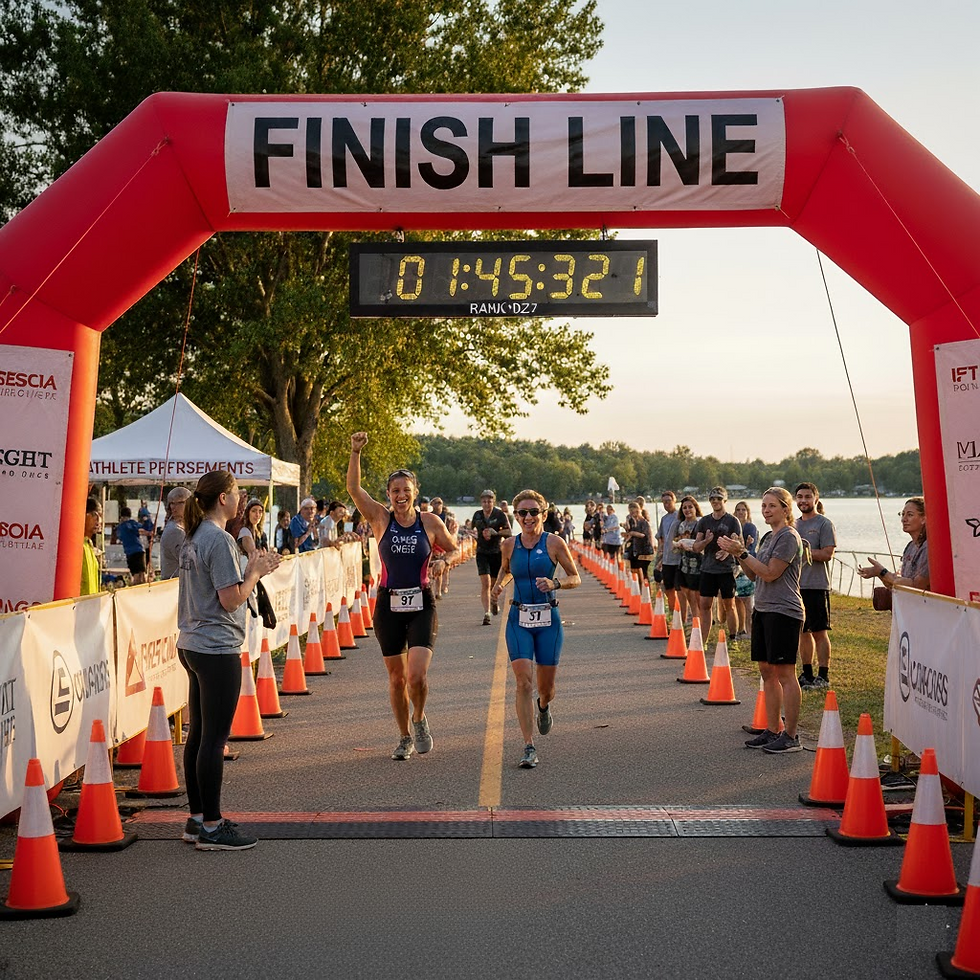
For that, I raced in local Olympic-distance events, anxiously anticipating the improvements that would materialise during my next half-distance race.
During training, I started to see an improvement in my running pace. The irony is that training for marathons never actually made me faster, but cycling and swimming regularly did. I suppose two factors helped: the fact that I was putting in more training hours, and that different activities were developing my body, making my muscles work in new ways that had an impact on my overall fitness level—and more particularly on my running pace. Funny thing is, these improvements always appear suddenly. You run at your usual pace one day, feeling good but nothing special, and suddenly, during the next session, you literally fly above the ground. And the more you push, the faster you go. It’s a fantastic feeling and a great satisfaction at the end of the session to look back at what you just did and measure the step forward. Some with tracking devices will smile while looking at their watch, while others will smile full stop.
Competing in local races was also helpful in the sense that it made me feel more comfortable with other aspects of triathlon: transitions, logistics, etc.
It also gave me more confidence in being able to switch from one activity to another and finish the race with good management of my resources. And I believe that’s a crucial part of triathlon—and a difficult one to master. It takes time and practice, and I haven’t found any solution other than entering races. Of course, you can also simulate it during training, but that means lengthening the distance on the bike and on the run, which will ultimately make you more tired and affect the rest of your training.
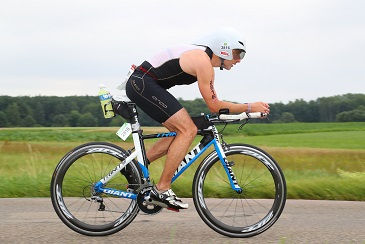
During a race, you need to be able to gauge your effort and what’s left in your tank so that you have enough energy to finish. First of all, efforts are very different between swimming, cycling, and running. During a marathon—or even over a shorter distance—with some experience, it becomes relatively easy to feel the limit not to cross so you can maintain the same pace until the end. The effort is always of the same type, which makes it easier to manage your resources. But in a triathlon, swimming, cycling, and running are efforts of completely different kinds. So the effort you make on the bike may feel sustainable, but it may be too high and prevent you from running at a satisfying pace. The more you push on the bike, the more difficult your run will be, while if you go easy and keep some strength, your bike leg will be slower but your run will be stronger. It really is one or the other (for a detailed explanation, please refer to the chapter about performance analysis), and it is sometimes hard to accept slowing down on the bike if you want a faster run.

The couple of races I did both had their own characteristics, and it was interesting to gain experience through various situations. I had the target to go sub-2:30, and I failed by only 8 seconds!
To date, I still haven’t entered another Olympic-distance race, so that stands as my best time. Based on later results, I should break the 2:30 barrier quite easily, but it hasn’t happened yet.
Comments