


Chapter 4 - Nutrition and addiction

We saw briefly in a previous chapter that to become stronger, you need to adapt your diet. And if you’re even slightly interested in triathlon, you must have come across lengthy articles about how to fuel before, during, after, and between races. Then you realise that you can’t escape being in one of the four situations above. That’s it, triathlon has taken over your life!
From close and distant fellow triathletes I’ve met over the years, I’ve seen the full scale and consequences this can have on a triathlete’s life. This sport is so addictive that you really can become obsessed with it, and it can even ruin your life, in a good way.
I’ve heard many times the story of triathletes giving up their jobs so they can work half-time and train more. They change their diet to become leaner, move to sunnier places so they can train all year long, and very often their partner, girlfriend, children—or all of them—won’t accept this maelstrom and will part ways rather quickly. The origin of this change in behaviour is often the same for all triathletes. It’s called Hawaii, and we’ll talk about it later.
At this stage of the book, I still can’t answer the second question I asked on page one. I still don’t know why I inflict these long sessions on myself - or worse, why I enjoy them so much. And since I do, I keep going.
But we’re moving away from the subject of this chapter, so let’s go back to nutrition. For that, I’m going to take my own experience as an example. I grew up in France, the country of gastronomy and fine wines. Without being a specialist, I appreciated good wines and good food. And good food usually rhymes with fat and sugar. They are the tastiest ingredients and the ones that trigger a reaction in your brain that says, “I like that, I want more.”
Unfortunately, your metabolism works in such a way that everything brought in by food that isn’t burned is stored as fat. Fat is everywhere in our bodies and represents a huge amount of energy. I remember reading something like 50,000 kcals, while our muscles can only store the equivalent of about 2,500 kcals. So too much sugar or fat intake means a heavier body—and more gravity to fight when cycling uphill, or more weight to carry when running.
There is no miracle: if you want to lose fat, you have to give up a lot of tasty food. The good news is, you’ll get used to it.
For me, that meant cutting cured meats—including Parma ham and sausages—but also cheese (especially creamy ones), butter, all types of sauces, pizzas, burgers, and processed food in general.
It’s hard at the beginning, but by going step by step, you may get used to it. I didn’t think much about what I was giving up, but a few months later I realised the effort I’d made and saw the results on the scale and on the bike. Coupled with good training, results come rather quickly, and that’s rewarding and encouraging. Better results in races or training sessions help you cope with occasional cravings and fuel your motivation to stick to a healthy diet—which in turn leads to better performance, and so on.
This is by no means a recommendation or a scientific approach to losing weight; it’s simply my experience and what worked for me. I’m not obsessed with my weight and will allow myself an occasional burger or pizza—but I can feel the difference during the next training session, and given that triathlon is now ruling my life, I usually go back to my regular diet.
What I try to avoid the most is alcohol. If you don’t believe me, try a high-intensity running session the morning after a night with too much vodka. I’m sure you’ll have plenty of memories to tell—and enough reason not to do it again. If you try going to the pool instead of running, the contact with the water might make you feel better at first, but the deeper you get into the session, the harder it becomes. And if there were fish in that pool, no doubt they’d be well fed. The last option is to go for a ride—if the level of alcohol in your blood allows it. See? There’s only one option left: don’t drink too much.
And as with other types of food, you’ll get used to drinking less and might actually enjoy it—especially if you’re over 40, when it becomes harder to recover from a night out and even harder to train after one.

On a daily basis, I try to balance my intake of carbohydrates and proteins. Long story short: proteins are meat and fish, carbs are pasta and rice.
And above all, I try to avoid sugar in all its forms, especially in juices and sodas. My benchmark is 100 ml of Coke, which contains 11 g of sugar. So I read food and drink labels, and with that number in mind, it’s easy to compare. I generally allow myself anything below 6 g of sugar per 100 g or ml.
So have a look at labels when you go shopping, and you’ll be amazed by the amount of sugar or fat you may find in some products. As an extreme example, I once found a tomato sauce with 12 g of sugar and 48 g of fat per 100 g. No doubt it must be very tasty—but how many minutes would one spoon of that add to my bike split in my next triathlon? I prefer not to think about it and move on to a healthier option.
Over the years, my diet has dramatically changed. As a result, I lost 4 kg, I sleep well, and my metabolism feels more efficient. Overall, I feel fit, it helps me push harder during training, and the results follow.
Before or during races, however, nutrition is completely different. It is important—if not crucial—to eat while racing, even over short distances. But during a race, your body is focused on performance, not on digesting what you throw at it. So I had to train my body to do both, allowing me to keep fuelling my muscles while racing. To achieve this, I trained like I would for any other skill: I got into the habit of bringing gels or bars with me during training, and session after session, my stomach got used to it.

I extensively reviewed all types of bars—looking at their ingredients, calorie content, taste, texture, and how they would hold up during long sessions in my pockets—until I found one that ticked all the boxes. Since then, I haven’t changed brands. It works, so why try to fix it?
To give you an example, before understanding race nutrition, I would run an entire marathon without fuelling. I’d keep a good pace until 28–30 km, at which point I would “hit the wall” and struggle until the finish. At the time, I was convinced it was because my training wasn’t good enough. That belief changed when I read an article explaining that muscles store roughly 2,500 kcals—about what I would burn over 28–30 km. After that, there would simply be no fuel left. No surprise I was struggling to finish.
So as an experiment, I ran the Nice–Cannes Marathon and decided to fuel from the very start. It’s a beautiful race: the weather is usually sunny but not too hot, the views of the Mediterranean Sea are gorgeous, and you get to see a bit of the French Riviera.
I stayed in a hotel in Cannes, took the train to Nice—40 km away—very early on a Sunday morning, and ran back home.
Like most races, it starts early. As the sun rose and lit up the sky and scattered clouds, it felt like the perfect setup for a long run. I prepared less than usual, probably because I felt experienced with marathons by then. Only when I reached the starting line did I realise I was actually going to run 42 km, and I felt a bit stressed—but that quickly dissipated in the atmosphere of the start.

The route begins at the very start of the Promenade des Anglais and follows the coast through Mandelieu, Antibes, and Juan-les-Pins, finishing on the Croisette in Cannes. The year I ran, Paula Radcliffe gave the start and wished good luck to the 12,000 runners. I started at an easy pace, like in my previous marathons, and as soon as I reached Nice Airport—5 km after the start—I had my first bites. I carried two energy bars and planned to eat a quarter of each every 5 km, which would cover the entire distance. These bars can be sticky and hard to chew and swallow, so I usually took my bites just before aid stations and washed everything down with water.
Slowly but surely, the kilometres passed, and I still felt good—though I was anxious about whether I’d hit the usual wall at 28–30 km. Through Antibes, enjoying the view and pushing harder on the climbs through Cap d’Antibes, I was still doing well and eating regularly. At km 31, I felt good. At km 34, still good—and I realised it was now too late to hit the wall. I took what would be my last bite of the day, as I couldn’t eat any more of that sticky bar, and kept pushing to the finish line. Over the entire distance, I maintained a constant pace—faster than usual—and didn’t hit the wall. I smashed my previous record, but more importantly, it was the first time I felt in control of the distance. That was enough to convince me, and since then I’ve always fuelled during races, preferably from the start.
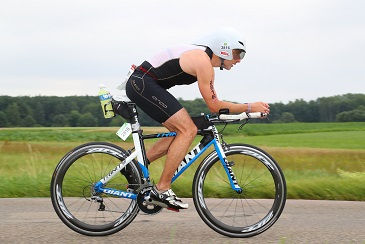
I applied the same technique to cycling, and now I eat a quarter of an energy bar every 10 km. I do this on every long ride or run when I know I’ll need to maintain a good pace or push harder than usual. I used to cut the bars on race mornings, remove the packaging, and stick them to my bike’s top tube, wrapped in kitchen plastic film. That way, I only had to grab a piece every 10 km without taking both hands off the handlebars, fighting with packaging, or—worse—dropping the entire bar, which happens more often than you’d think. Recently, I improved the method by putting all the cut pieces into a plastic bag, which then goes into a small pouch attached to the top tube near the handlebars. It’s even easier to grab from and avoids dealing with layers of plastic film.
As for drinking, I used to carry one bottle of isotonic drink and one bottle of water. More and more, though, I tend to skip the isotonic drink and only drink water. I believe the bars provide enough of what I lose through sweat during a race, and since they already taste very sugary, I prefer plain water.
Isotonic drinks can also upset my stomach, usually at the worst possible moment. I’m quite sensitive to dilution ratios, and if I get it wrong, my stomach can react very suddenly—which is the last thing you want on race day.
Finally, I feel I can better judge whether I’m actually thirsty when I drink only water. I think the taste of isotonic drinks can make your mouth feel dry, leading you to believe you’re thirsty when you’re not.
Comments